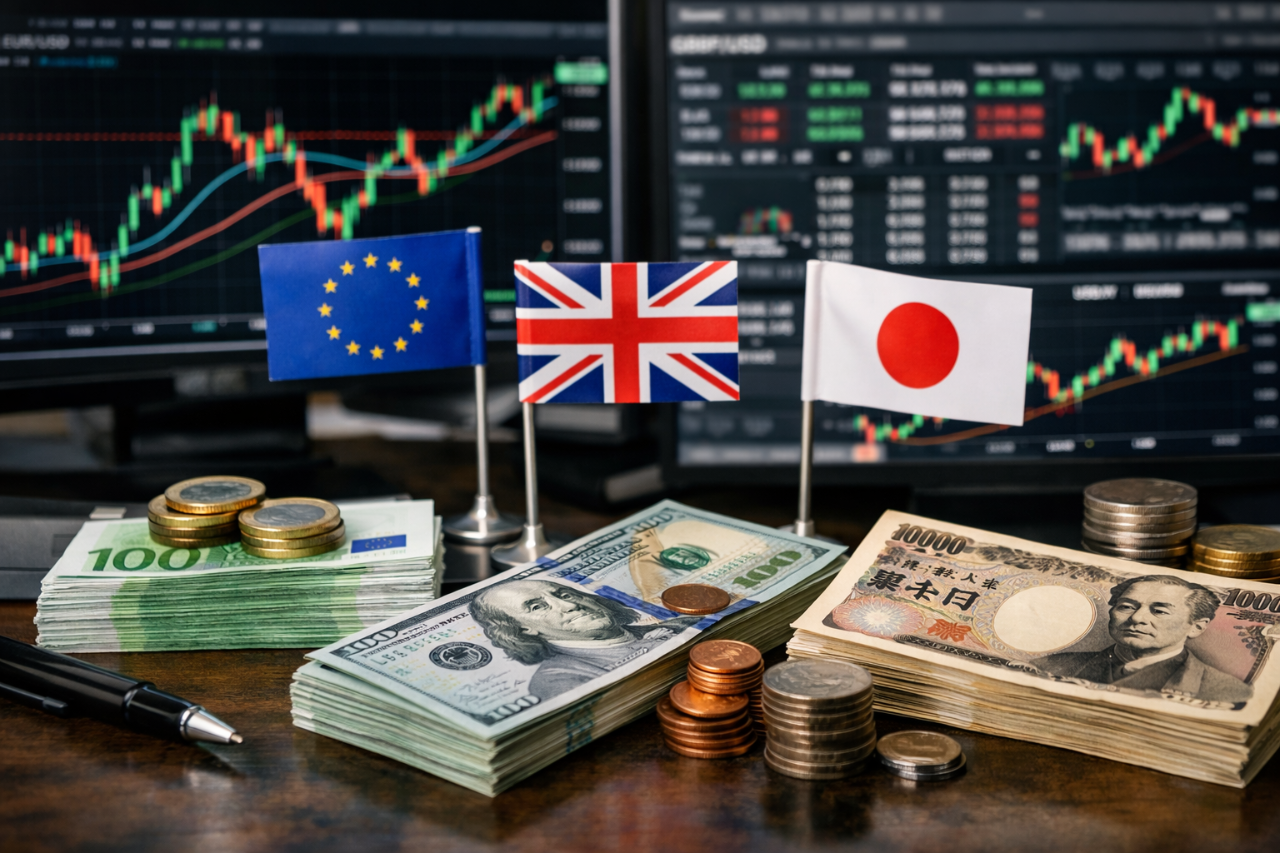
Dollar Reaches Two-Week High
The U.S. dollar moved higher against several major currencies on Wednesday as investors sought safety amid renewed military tensions in the Middle East.
The dollar index reached its highest level since August 17 as rising energy prices increased concerns about inflation and global economic growth.
Brent crude prices moved above $95 per barrel after renewed U.S.-Iran tensions raised concerns about possible disruptions to energy supplies.
Higher oil prices can increase inflation expectations, making investors more cautious about currencies linked to economies that are heavily dependent on imported energy.
EUR/USD Faces Fresh Pressure
EUR/USD moved lower as the stronger U.S. dollar and rising energy costs weighed on the euro.
The euro remains sensitive to the European Central Bank's interest-rate outlook, particularly as markets assess how higher energy prices could affect inflation across the eurozone.
USD/JPY Nears the 160 Level
The Japanese yen remains under close observation after USD/JPY moved toward the psychologically important 160 level.
The yen received some support as traders considered the possibility of further Bank of Japan rate increases and continued Japanese efforts to stabilize the currency.
The risk of intervention remains an important factor for traders because Japanese authorities have previously acted aggressively when yen weakness became excessive.
New Zealand Dollar Falls
The New Zealand dollar weakened despite the Reserve Bank of New Zealand raising its official cash rate by 25 basis points.
Traders viewed the central bank's decision as less hawkish than expected, highlighting how currency markets can react negatively even when interest rates are increased.
Federal Reserve Rate Expectations Rise
Markets are increasingly focused on the Federal Reserve as inflation risks rise and U.S. Treasury yields remain elevated.
Investors are now pricing a significantly higher probability of a September Federal Reserve rate hike compared with the previous week.
Higher U.S. interest-rate expectations can support the dollar because they increase the potential return available from dollar-denominated assets.
Upcoming U.S. employment and inflation data will therefore remain critical for determining whether the dollar's recent rally can continue.
Forex Market Outlook
The near-term outlook for major currency pairs remains highly sensitive to geopolitical developments, oil prices and central bank policy.
Continued strength in the U.S. dollar could keep EUR/USD and GBP/USD under pressure, while USD/JPY may remain volatile around the 160 level.
A decline in oil prices or softer U.S. economic data could reduce demand for the dollar, while further geopolitical escalation could increase safe-haven demand.
Forex traders should monitor Treasury yields, crude oil prices, Federal Reserve communications and major economic releases before taking directional positions.
Forex volatility is rising as higher oil prices, geopolitical risk and changing Federal Reserve expectations support the U.S. dollar.
Frequently asked questions
Why is the U.S. dollar rising today?
The dollar is benefiting from safe-haven demand, higher oil prices, elevated Treasury yields and increased expectations for Federal Reserve rate hikes.
Why is EUR/USD falling?
EUR/USD is under pressure from broad U.S. dollar strength and concerns that higher energy prices could create additional inflation and economic pressure in Europe.
What is happening with USD/JPY?
USD/JPY remains near the important 160 level as traders balance U.S. rate expectations against the possibility of further Bank of Japan tightening and Japanese currency intervention.
What could reverse the dollar's rally?
Softer U.S. economic data, lower Treasury yields, falling oil prices, reduced Federal Reserve rate expectations or easing geopolitical tensions could weaken the dollar.
Market News Desk
The Pips School editorial team writes independent educational material on forex markets, broker selection and risk management.
Editorial principles
